
GST Registration
Service
GST Registration

GST Registration: What is it?
Businesses that generate more than Rs. 40 lakh, Rs. 20 lakh, or Rs. 10 lakh, as applicable, are required to register as regular taxable persons under the Goods and Services Tax (GST). According to CGST Section 10 of the Composition plan, the threshold turnover limit for a select group of professionals and small enterprises is Rs. 50 lakh and Rs. 1.5 crore, respectively. Regardless of their turnover, some firms must register their operations under the GST statute.
In each of these situations, the process of acquiring a GSTIN (GST Identification Number) is referred to as GST registration.
It is an offense under GST, and there would be severe consequences if the entity continues to operate without registering as required.
The advantages of registering for GST
A. For typical companies that are registered:
1. Utilize the input tax credit
2. Carry out interstate transactions without limitations
B. For traders of composition:
1. Limited adherence
2. Reduced tax obligation
3. Minimized effect on working capital
C. For companies that choose to voluntarily register for GST (below Rs. 40 lakhs*):
1. Use the credit for input taxes.
2. Carry out interstate transactions without limitations
3. Easily sign up for online and e-commerce platforms
4. Gain a competitive edge over competing companies
Book A Consultation
How can we help you?
Need Help with Legal Drafting or Registration? Talk to Our Experts Now!
Documents Required
GSTIN
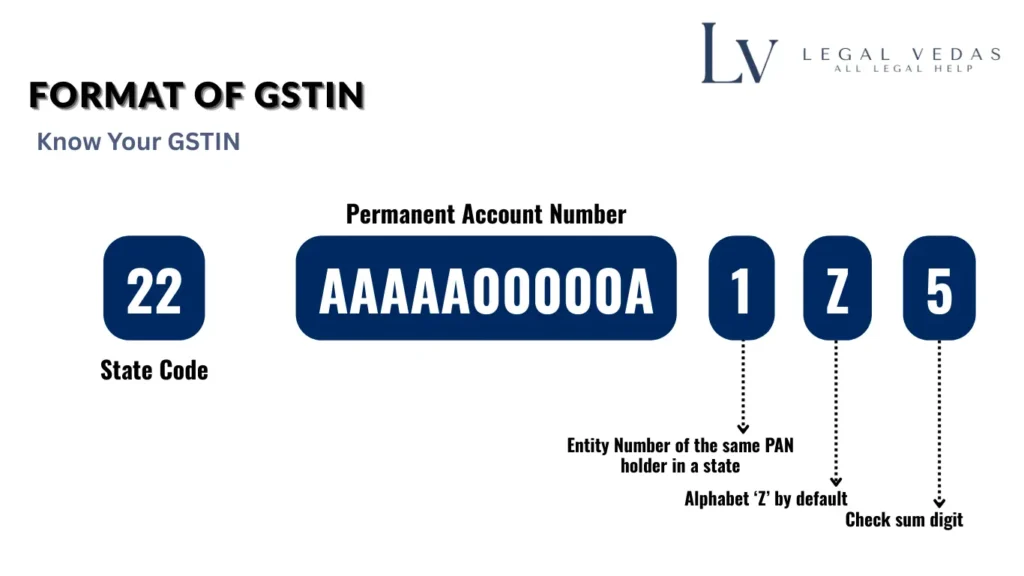
The 15-digit Goods and Services Tax identification number, or GSTIN, is exclusive to each company doing business in a given state or territory. A taxpayer will be given a GSTIN to use in their tax returns and invoices after obtaining GST registration.
Every company subject to GST is required to reveal the GSTIN in order to verify the legitimacy of the vendor and the GSTIN or GST number that is being used on the invoice.
Our Assurance
Transparent & Timely Service
There are no hidden fees or delays—only straightforward communication, quick turnaround, and dependable legal support from start to finish.
Accuracy & Compliance
We ensure that every legal document and process is drafted precisely and in complete compliance with current laws and government regulations.
Confidentiality Guaranteed
Your personal information and legal documents will be treated with strict secrecy and data security. We keep your confidentiality with care.
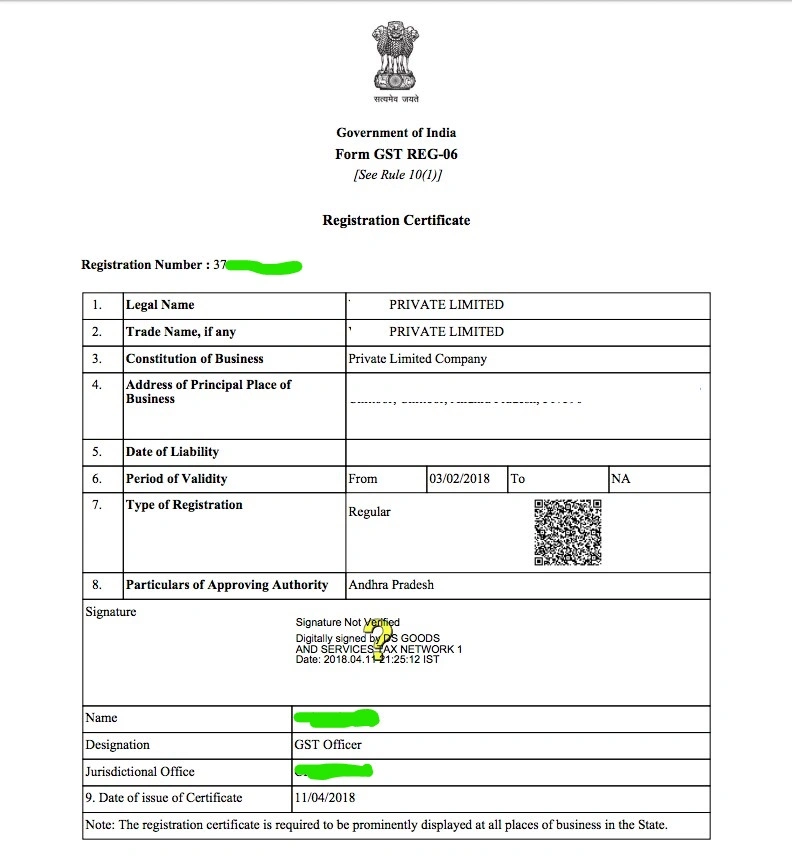
Certificate of GST Registration
After getting GST registration, taxpayers receive a GST registration certificate. It includes the taxpayer's trade name, legal name, GSTIN, primary business location, other business locations, authorized personnel, and information on federal and state laws.
The GST certificate needs to be conspicuously displayed at the main office.
Penalties for failing to register for GST
A penalty of 10% of the tax amount owed, up to a minimum of Rs. 10,000, must be paid by the offender who fails to pay taxes or makes short payments (real errors).
If the offender willfully avoided paying taxes, the penalty will be 100% of the tax amount owed.
Frequently Asked Questions (FAQs)
Yes, once your turnover surpasses the designated threshold limitations, you must register for GST. To learn more about the most recent GST registration limits, click the links.
A taxpayer should have a separate GST registration for each state in which their business operates. For example, if a car firm sells in both Tamil Nadu and Karnataka, he must apply for separate GST registrations in both states.
People who offer goods or services may also choose to register for GST voluntarily if their annual turnover is below a certain threshold or be required to do so under CGST Section 24 if their annual turnover reaches a certain threshold.
The various GST registration types as specified by the GST statute are as follows:
1. Taxable Person who is not a residence
2. A non-taxable individual
3. Registration of the composition scheme
4. Distributor of Input Services (ISD)
5. Normal or regular GST registration
6. Reverse Charge Mechanism Users
7. Choosing to register voluntarily
8. Operators of E-Commerce
9. Platform for E-Commerce 10. TDS/TCS Deductor
11. Developer of Special Economic Zones (SEZs)
An applicant for GST registration does not have to pay any fees on the GST system. Penalties for failure to get GST registration may be imposed on taxpayers in situations where it is required by law.
It is also possible to voluntarily register for GST. In addition, some businesses specified in CGST Section 24 are required to register for GST. Additionally, enterprises and professionals whose yearly revenue surpasses the threshold set by the GST statute must register for GST.
The taxpayer will receive a valid GST Identification Number and a GST registration certificate in Form GST REG-06 upon successful completion of the GST registration process. Input tax credit will be available, invoices must be GST-compliant, and monthly or quarterly GST reports must be filed, as applicable.
Within 30 days of the date on which they become liable to get GST registration, anyone must do so.
An applicant will have the opportunity to respond to the rejection letter if they discover that their application for GST registration was denied. They will have to wait around ten days for a definitive refusal, though, if they wish to submit a fresh application for GST registration.
Our Simple 3-Step Journey
Your Legal Path with Legal Vedas
Reach Out to Us
"Fill out the contact form, call us directly, or connect with our team on WhatsApp to share your legal service requirement.

Get Personalised Guidance
Our legal specialist will communicate with you, understand your requirements, and walk you through the paperwork or writing process.


Our Latest Blogs
Latest legal Information

Behind the word mountains, far from the countries Vokalia and Consonantia, there live the blind texts they live
Registeration
Subscribe Now
Don’t miss our future updates! Get Subscribed Today!
©2025. Legal Vedas. All Rights Reserved.